 by
by Nasal polyps are often mistaken for long-lasting sinus infections.
You may keep treating nasal blockage, yet symptoms return again and again.
This usually happens because the real issue sits deeper inside the nasal lining.
Understanding nasal polyps helps you take the right treatment early and avoid long-term breathing problems.
This guide explains symptoms, causes, recurrence patterns, and treatment options in a simple and practical way.
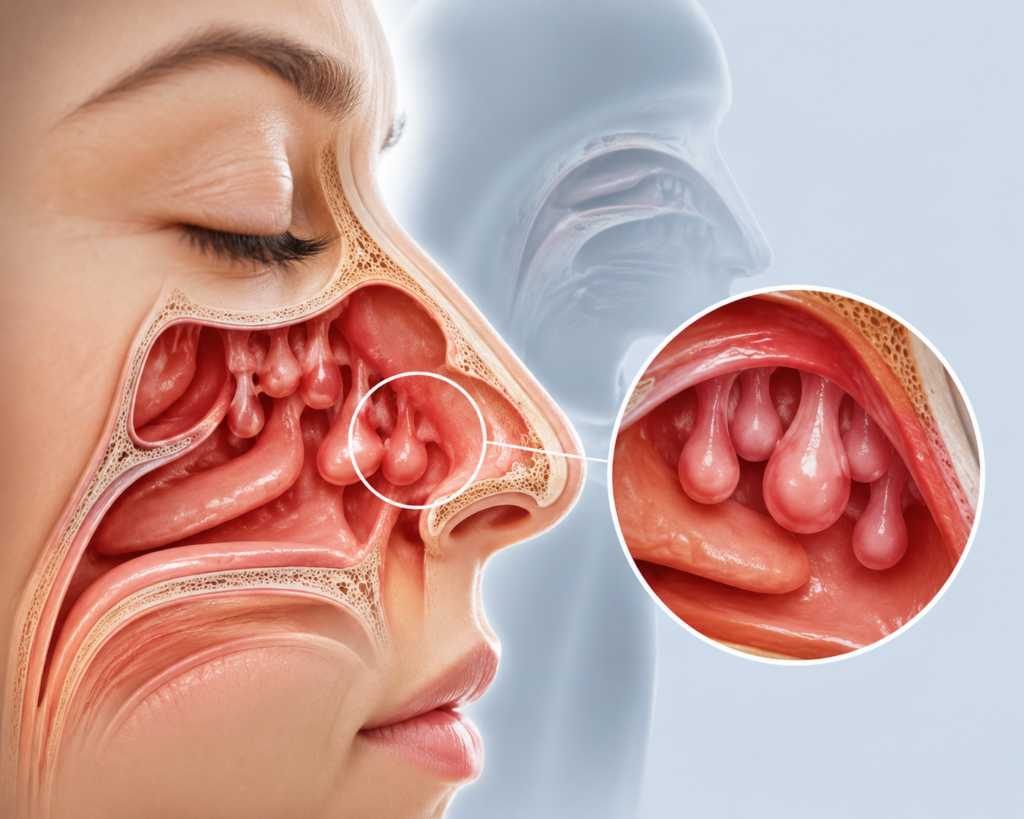
Why Nasal Polyps Develop Inside Your Nose
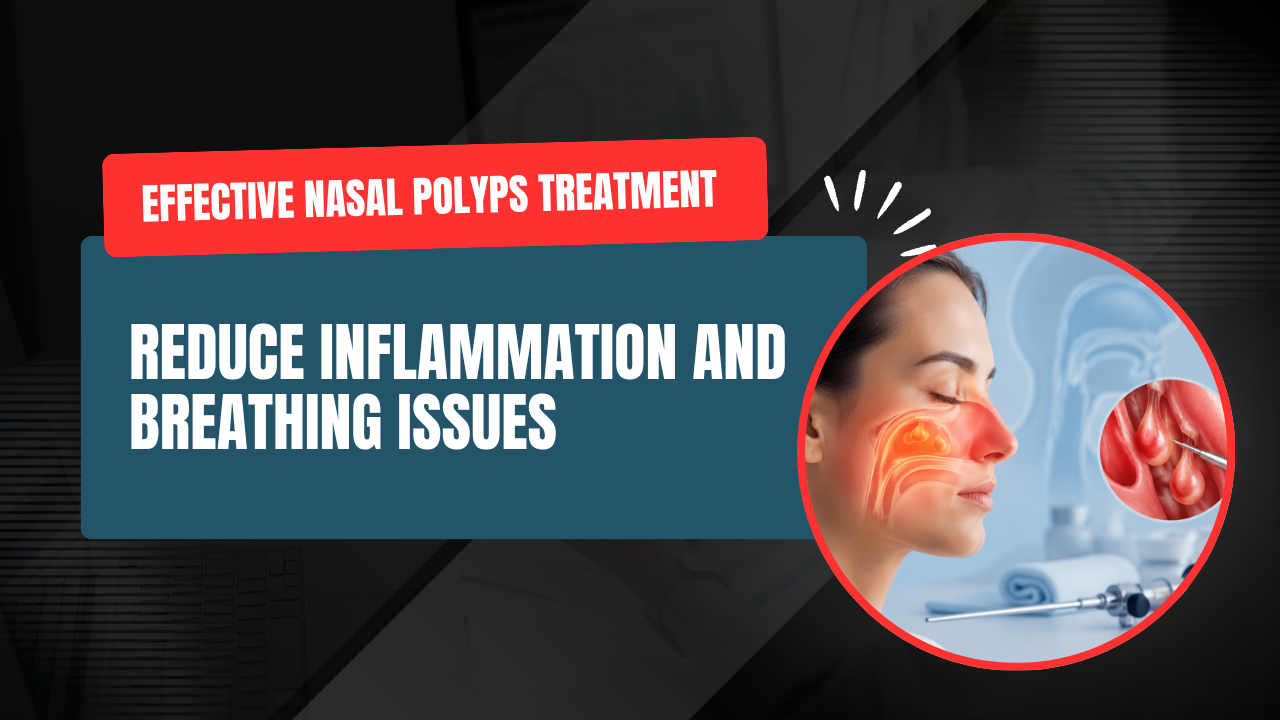
Nasal polyps form due to long-term inflammation in the nasal and sinus lining. Your body keeps reacting to irritants like dust, pollution, or allergens. This constant inflammation makes the nasal tissue swell and grow soft, grape-like masses.
Over time, fluid builds up inside the lining. This leads to small swellings that slowly turn into polyps.
Common triggers include:
- Chronic sinus infections
- Allergic rhinitis
- Asthma
- Sensitivity to smoke, dust, or chemicals
You may notice that symptoms worsen during seasonal changes.
This is because inflammation becomes more active during allergy flare-ups.
People with repeated sinus issues often ignore early warning signs.
That delay allows polyps to grow larger and harder to control.
Early Symptoms You Should Pay Attention To
Nasal polyps do not appear suddenly.
They grow slowly and often go unnoticed at first.
You may experience:
- Persistent blocked nose
- Reduced sense of smell
- Runny nose that does not improve
- Pressure in forehead or cheeks
- Mouth breathing during sleep
- Snoring or disturbed sleep
Loss of smell is one of the most important warning signs.
It usually starts gradually, not suddenly.
Some people assume it is a simple cold.
But if symptoms last longer than a few weeks, it needs evaluation.
Ask yourself:
Do you keep using nasal sprays but still feel blocked?
That pattern often points toward nasal polyps rather than infection.
How Doctors Diagnose Nasal Polyps
Doctors do not rely on symptoms alone.
They look directly inside your nose to confirm the condition.
Common diagnostic steps include:
Nasal endoscopy
A thin camera is inserted inside the nose.
It helps the doctor see deep nasal passages and detect hidden polyps.
CT scan of sinuses
This shows the full extent of sinus blockage.
It helps plan treatment if surgery is needed.
Allergy assessment
If allergies are suspected, testing helps identify triggers.
Diagnosis also helps rule out other conditions that mimic nasal blockage.
Treatment Options for Nasal Polyps
Treatment depends on severity and recurrence risk.
Doctors usually start with non-surgical methods.
1. Nasal steroid sprays
These reduce inflammation inside the nose.
They help shrink small polyps and improve airflow.
2. Oral steroids
Short-term tablets are used for moderate inflammation.
They give faster relief in severe blockage cases.
3. Saline rinses
Rinsing clears mucus and allergens from nasal passages.
This supports other treatments.
4. Allergy control
Managing triggers reduces repeated inflammation.
This includes avoiding dust, smoke, and pollution exposure.
5. Endoscopic sinus surgery
Surgery is recommended when medication fails.
Doctors remove polyps and open blocked sinus pathways.
Breathing improves after surgery, but care must continue to prevent recurrence.
Why Nasal Polyps Come Back After Treatment
Recurrence is common in nasal polyps.
This happens because the underlying inflammation does not stop completely.
Several factors increase recurrence risk:
- Untreated allergies
- Asthma-related inflammation
- Incomplete sinus drainage
- Environmental pollution exposure
- Chronic sinus disease
In some patients, the nasal lining remains sensitive even after surgery.
This means polyps can slowly return if triggers are not controlled.
Long-term management is important.
Regular follow-ups and maintenance sprays reduce recurrence chances.
Living With Chronic Nasal Blockage
Nasal polyps affect daily life more than most people realize.
Sleep quality drops due to blocked breathing.
Loss of smell affects taste and appetite.
You may also feel tired due to poor oxygen flow during sleep.
This can affect focus and productivity during the day.
Simple habits help control symptoms:
- Regular saline nasal rinse
- Avoiding smoke and pollution exposure
- Taking allergy treatment seriously
- Following prescribed nasal sprays consistently
Ignoring symptoms allows inflammation to progress silently.
Early control makes treatment easier and more effective.
Role of Specialist Care in Nasal Conditions
Proper evaluation from an ENT specialist helps prevent complications.
Accurate diagnosis ensures correct treatment planning.
If you are searching for expert evaluation of chronic nasal blockage, you may come across experienced specialists managing such conditions in your region. For example, patients looking for Nasal Problems in Kharghar often consult experienced ENT doctors for detailed assessment and treatment planning.
Specialist care becomes important when:
- Symptoms last more than a few weeks
- Smell loss continues
- Medications stop working
- Sinus infections keep returning
In such cases, timely intervention improves outcomes significantly.
Some patients also consult an ENT Surgeon in Kharghar when surgical treatment becomes necessary after failed medical management. Proper evaluation ensures surgery is done only when required.
Doctors such as Dr Sujata A. Gawai are often associated with managing chronic nasal and sinus conditions, helping patients understand treatment options based on severity and recurrence patterns.
When You Should Not Delay Treatment
You should seek medical attention if:
- Nasal blockage does not improve
- Smell loss continues for weeks
- Sleep becomes disturbed due to breathing issues
- You rely on nasal sprays daily without relief
Delaying treatment allows inflammation to worsen.
This makes future treatment more complex.
Early care helps control symptoms before polyps grow large.
FAQs About Nasal Polyps
1. Are nasal polyps dangerous?
No, nasal polyps are non-cancerous. They mainly affect breathing and sinus health.
2. Can nasal polyps disappear without treatment?
Small polyps may reduce with medication, but most need medical management.
3. Why does smell reduce in nasal polyps?
Polyps block airflow to smell receptors inside the nose.
4. Can nasal polyps return after surgery?
Yes, recurrence is possible if inflammation is not controlled long-term.
5. Is surgery painful?
Endoscopic surgery is usually done under anesthesia. Recovery is generally manageable.
Nasal polyps develop from long-standing inflammation inside the nose.
They affect breathing, sleep, and quality of life if ignored.
Treatment includes medication, allergy control, and sometimes surgery.
Long-term management is important to prevent recurrence.
Early consultation with a specialist helps you control symptoms and maintain healthy nasal function.